
Green Hydrogen and Geopolitics: Germany’s Namibia Strategy in the Shadow of China’s Industrial Expansion
Svetlana Alexeeva
China’s latest Five-Year Plan has elevated green hydrogen to a strategic priority. Within this framework, hydrogen and its derivatives, especially ammonia and methanol, are now treated alongside other frontier technologies such as nuclear fusion as future growth fields that Beijing intends to scale aggressively over the coming years. That matters far beyond China itself. It signals that the global contest over hydrogen technology, industrial scale and cost competitiveness is entering a new phase.
For Europe, and particularly for Germany, this is more than just another policy announcement from Beijing. Hydrogen is no longer a niche industrial input. It is becoming a central technology in decarbonisation, sector coupling and future industrial policy. The core question is increasingly uncomfortable: are we about to see in hydrogen what Europe has already experienced in solar and parts of electric mobility, where China moved faster, scaled earlier and captured decisive industrial advantages? While the comparison is not exact, the underlying pattern of scale-driven cost leadership is similar.
That strategic shift becomes especially visible when viewed through the lens of Hyphen Hydrogen Energy, the flagship German-Namibian green ammonia project near Lüderitz. The project was contractually anchored with the Namibian government in 2023 and has since become a symbol of a broader German push to combine climate policy, industrial strategy and a recalibrated Africa policy. In Berlin’s official thinking, strategic partnerships with African countries are meant to go beyond traditional development-policy models and focus more explicitly on energy, raw materials and mutual economic benefit. The article also notes that Chancellor Friedrich Merz described Africa in 2025 as a “continent of opportunities,” underscoring that this is now part of Germany’s geoeconomic agenda.
Namibia, in many ways, is a logical partner in that strategy. It has strong natural conditions for green hydrogen and green ammonia production: abundant sun, strong wind resources and large areas of available land. The country also hopes that such projects could bring more than export revenues - namely infrastructure investment, industrial value creation and much-needed employment. At the same time, Namibia is not just any African partner for Germany. As a former German colony, it is also a place where historical responsibility and present-day strategic interests intersect in particularly sensitive ways.
This is precisely why Hyphen matters. It is not simply an energy project. It is also a test case for whether strategic partnerships can translate into visible local development. According to the published article, however, the project’s implementation has been slower than originally envisaged. Hyphen remains with key enabling infrastructure still incomplete. Port and export logistics are not yet in place, and infrastructure around Angra Point near Lüderitz requires significant expansion. Preparatory studies are being supported by the African Development Bank, while partners such as NamPort, the Port of Rotterdam and Gasunie are involved in the logistics and infrastructure dimension. Final investment decisions and financing structures also remain critical outstanding steps.
Commercial risk is no longer abstract. RWE’s withdrawal from its ammonia offtake arrangement was an early warning that Europe’s hydrogen market is developing more slowly than many expected. The EU sets ambitious targets - 10 million tonnes of domestic renewable hydrogen and 10 million tonnes of imports by 2030 - while Germany expects demand of up to 130 TWh by then. But political targets do not automatically create bankable markets. In particular, uncertainty around pricing, regulation and long-term contracts continues to delay investment decisions.
That is where Europe’s weakness meets China’s strength. While Europe is still struggling with demand, financing and rollout, China is already moving from pilot projects to industrial scale. According to the International Energy Agency (IEA), China accounted for a majority share (around two-thirds) of global installed electrolyser capacity in 2024. It is not an emerging competitor; it has already become a dominant one. However, much of this capacity is currently used for industrial hydrogen (including from fossil sources), so the transition to fully "green” hydrogen remains uneven. For Namibia, the consequences are immediate. Hyphen is moving slowly just as the competitive field is tightening. Egypt and Morocco are geographically closer to Europe, logistically easier and politically well placed. At the same time, Europe is also subsidising its own hydrogen production, which may further limit import demand. This creates uncertainty for export-oriented projects that depend on European offtake.
And China is not waiting. If it becomes a low-cost supplier of ammonia and methanol at scale, export-oriented projects like Hyphen will come under even greater pressure. This is already visible: the HyIron-Oshivela project in Namibia is already deploying a Chinese electrolyser. This illustrates how Chinese technology is entering African hydrogen value chains even in projects aligned with European partners.
So the issue is larger than renewable energy, and larger than Germany’s Africa policy. It is about who will shape the next industrial order around hydrogen. For Europe, the question is no longer whether hydrogen matters. It is whether it can still compete. The answer will depend less on targets and more on speed, scale and the ability to create functioning markets.
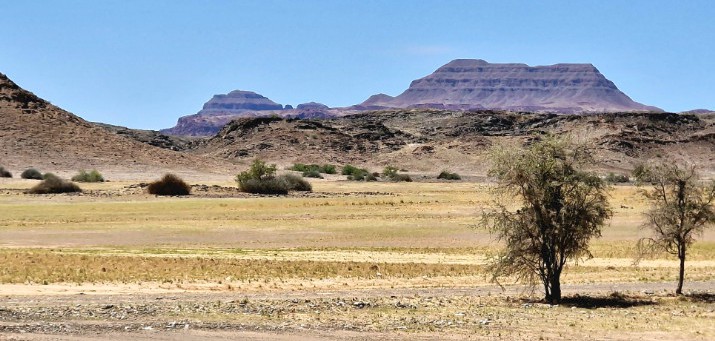
Picture © Svetlana Alexeeva
Contact the author: Svetlana.Alexeeva@digital-insight.de
2026-05-08
BOTSCHAFTER IN BERLIN
Hier finden Sie alle wichtigen Informationen über die ausländischen Botschaften in Berlin von A wie Afghanistan bis Z wie Zypern. Schauen Sie doch mal rein unter www.botschafter-berlin.de.
MONATSBRIEF
Wenn Sie sich für unseren kostenlosen Monatsbrief anmelden möchten, senden Sie bitte eine Nachricht.
LESER ÜBER UNS





Impressum | Datenschutzerklärung
© Diplomat Media Berlin 2017 —